
2D Echo
2D Echo
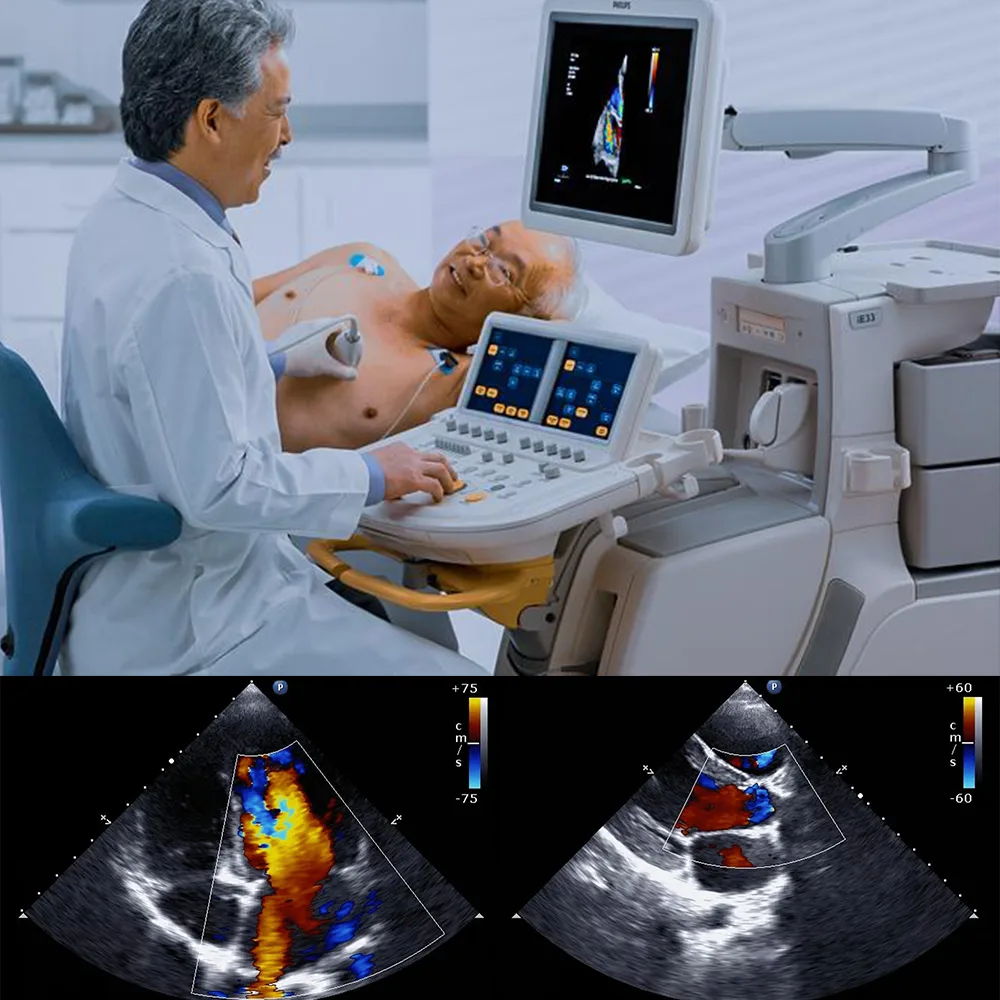
2D Echo (Two-Dimensional Echocardiography) is a non-invasive ultrasound-based cardiac imaging examination used to assess the structure, function, and movement of the heart in real time. It provides detailed visualization of the heart chambers, valves, walls, and blood flow, making it an essential tool for diagnosing and monitoring cardiovascular diseases.
Key Specifications (Typical)
- Imaging Technology: Two-Dimensional Echocardiography (Cardiac Ultrasound)
- Imaging Modes: 2D Imaging, M-Mode, Color Doppler, Spectral Doppler, and Tissue Doppler
- Examination Type: Non-invasive and radiation-free
- Display Type: Real-time cardiac imaging
- Transducers: Phased Array Cardiac Probe
- Doppler Capabilities: Color Doppler, Pulsed Wave Doppler, Continuous Wave Doppler, and Tissue Doppler
- Cardiac Assessment: Structural, Functional, and Hemodynamic Evaluation
- Image Storage: Digital image and video recording
- Connectivity: DICOM, PACS, USB, and network integration
- Applications: Diagnosis and monitoring of heart diseases and cardiac function
Common Clinical Uses
- Evaluation of heart chamber size and function
- Assessment of heart valve disorders
- Detection of congenital heart diseases
- Measurement of Left Ventricular Ejection Fraction (LVEF)
- Diagnosis of cardiomyopathy
- Assessment of pericardial effusion
- Evaluation of heart failure
- Monitoring of cardiac treatment outcomes
- Pre-operative and post-operative cardiac assessment
Advantages Over Conventional Cardiac Assessment
- Non-invasive and painless procedure
- No exposure to ionizing radiation
- Real-time visualization of heart structures
- Accurate assessment of cardiac function
- Early detection of structural heart abnormalities
- Portable and widely available technology
- Suitable for routine and emergency cardiac evaluation
Examples of Echocardiography Systems Used
- GE Vivid Series
- Philips EPIQ CVx Series
- Siemens ACUSON Sequoia Series
- Canon Aplio i-Series
- Mindray TE Series
Typical Benefits
- Early diagnosis of cardiovascular diseases
- Accurate evaluation of heart function
- Improved treatment planning and monitoring
- Enhanced assessment of valve and chamber abnormalities
- Safe for repeated follow-up examinations
- Supports preventive and interventional cardiology
- Reliable and essential tool for comprehensive cardiac care