
DSE (Dobutamine Stress Echo)
DSE (Dobutamine Stress Echo)
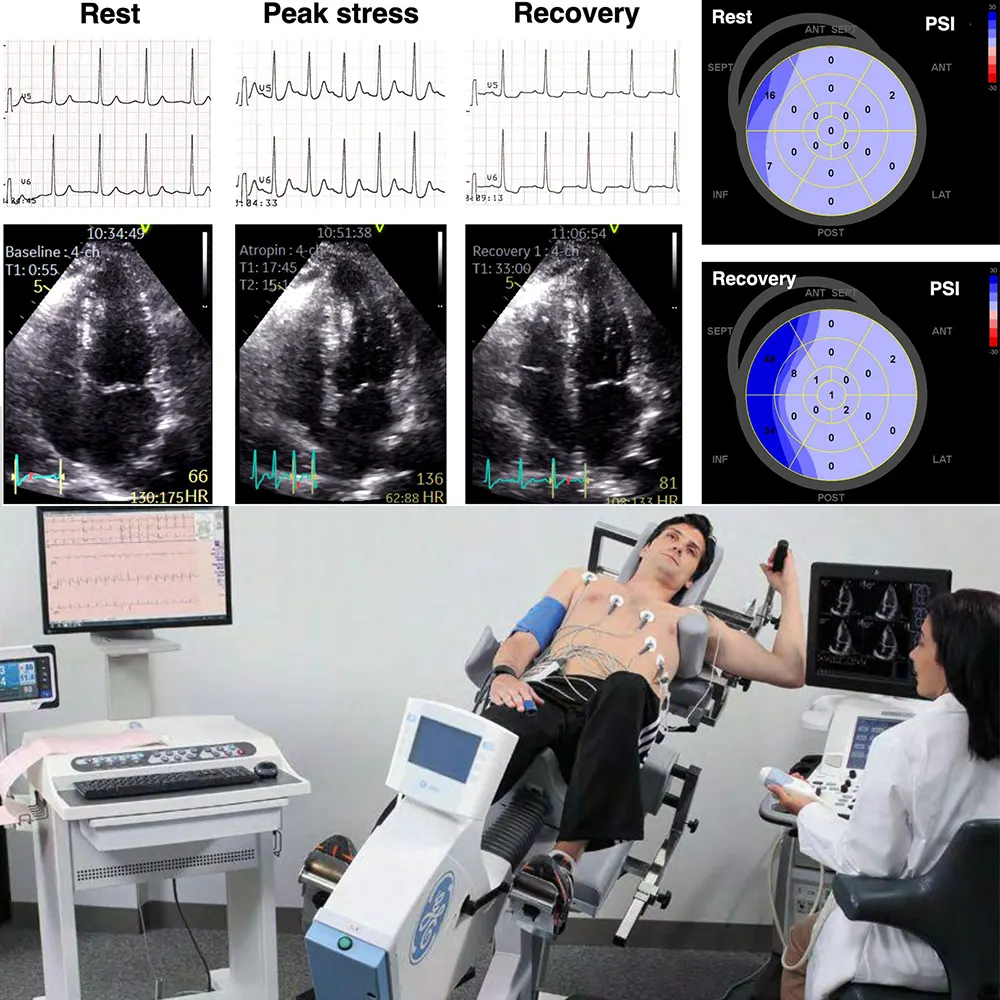
DSE (Dobutamine Stress Echocardiography) is a specialized cardiac ultrasound examination used to evaluate heart function when a patient is unable to perform physical exercise. During the procedure, Dobutamine, a cardiac stimulant medication, is administered intravenously to increase the heart rate and mimic the effects of exercise while echocardiographic images are obtained to assess cardiac performance and detect coronary artery disease.
Key Specifications (Typical)
- Imaging Technology: Dobutamine Stress Echocardiography (DSE)
- Imaging Modes: 2D Imaging, M-Mode, Color Doppler, Spectral Doppler, and Tissue Doppler
- Stress Method: Intravenous Dobutamine Infusion
- Examination Type: Non-invasive Cardiac Ultrasound with Pharmacological Stress
- Display Type: Real-time cardiac imaging
- Transducers: Phased Array Cardiac Probe
- Doppler Capabilities: Color Doppler, Pulsed Wave Doppler, Continuous Wave Doppler, and Tissue Doppler
- Cardiac Assessment: Wall Motion Analysis, Myocardial Viability, and Ischemia Detection
- Monitoring: Continuous ECG, Blood Pressure, and Heart Rate Monitoring
- Image Storage: Digital image and video recording
- Connectivity: DICOM, PACS, USB, and network integration
- Applications: Coronary artery disease evaluation and myocardial viability assessment
Common Clinical Uses
- Detection of coronary artery disease (CAD)
- Evaluation of suspected myocardial ischemia
- Assessment of myocardial viability after heart attack
- Pre-operative cardiac risk assessment
- Evaluation of patients unable to perform exercise stress testing
- Assessment of left ventricular function
- Follow-up of known cardiac disease
- Evaluation of chest pain and shortness of breath
Advantages Over Conventional Stress Testing
- Suitable for patients unable to exercise
- Non-invasive and radiation-free imaging
- Real-time assessment of heart muscle function
- Accurate detection of ischemia and viability
- Simulates exercise-induced cardiac stress pharmacologically
- Provides structural and functional cardiac information
- Supports advanced cardiac risk assessment
Examples of Systems Used
- GE Vivid Series
- Philips EPIQ CVx Series
- Siemens ACUSON Sequoia Series
- Canon Aplio i-Series
- Mindray TE Series
- Integrated Cardiac Monitoring and Infusion Systems
Typical Benefits
- Early diagnosis of coronary artery disease
- Accurate assessment of myocardial viability
- Improved treatment planning and cardiac management
- Enhanced evaluation of high-risk cardiac patients
- Safe and effective alternative to exercise stress testing
- Supports preventive and interventional cardiology
- Reliable diagnostic tool for comprehensive cardiovascular assessment