
Rediance RD

Follicular Monitoring

Follicular Monitoring

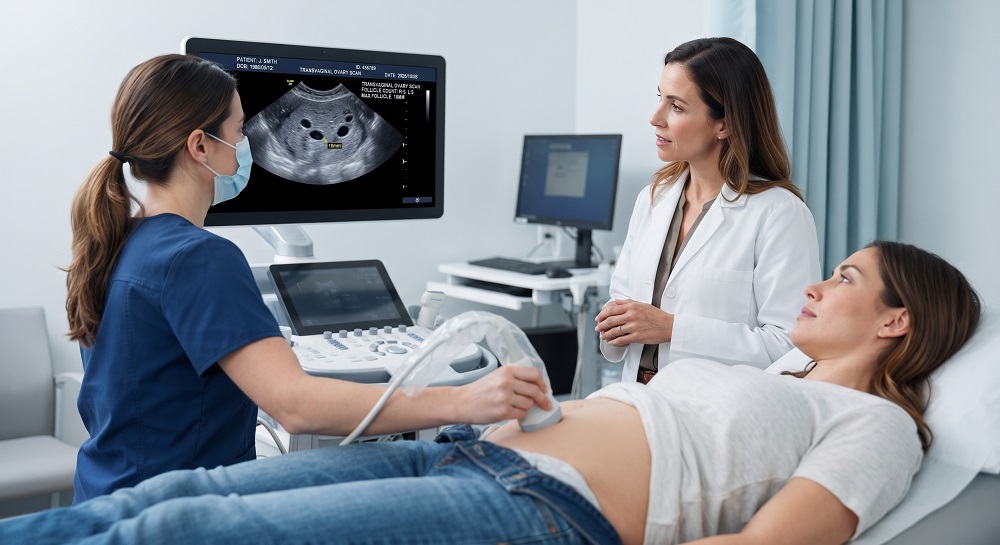
Follicular Monitoring is a specialized ultrasound procedure used to track the growth and development of ovarian follicles during the menstrual cycle. It is commonly performed as part of fertility assessment and treatment to determine the timing of ovulation and optimize the chances of conception.

Key Specifications (Typical)

  • Imaging Technology: Diagnostic Ultrasound Imaging
  • Imaging Modes: 2D Ultrasound with Doppler Support
  • Examination Type: Non-invasive and radiation-free
  • Display Type: Real-time imaging
  • Transducers: Endocavitary (Transvaginal) and Convex Probes
  • Doppler Capabilities: Color Doppler and Spectral Doppler
  • Image Storage: Digital image and video recording
  • Connectivity: DICOM, PACS, USB, and network integration
  • Applications: Ovulation tracking, infertility evaluation, and fertility treatment monitoring

Common Clinical Uses

  • Monitoring ovarian follicle growth
  • Determining the timing of ovulation
  • Fertility and infertility assessment
  • Monitoring ovulation induction therapy
  • Intrauterine Insemination (IUI) cycle planning
  • In Vitro Fertilization (IVF) treatment monitoring
  • Assessment of endometrial thickness
  • Evaluation of ovarian response to medications

Advantages Over Conventional Fertility Assessment

  • Accurate ovulation tracking
  • Real-time monitoring of follicular development
  • Non-invasive and radiation-free procedure
  • Helps optimize conception timing
  • Supports assisted reproductive treatments
  • Enables personalized fertility management
  • Improves treatment planning and outcomes

Examples of Ultrasound Systems Used

  • GE Voluson Series
  • Samsung HERA Series
  • Philips EPIQ Series
  • Canon Aplio Series
  • Mindray Resona Series

Examples of Ultrasound Systems Used

  • Enhanced fertility evaluation
  • Precise identification of ovulation period
  • Improved success rates in fertility treatments
  • Better monitoring of ovarian function
  • Safe and repeatable examination
  • Supports individualized reproductive healthcare
  • Valuable tool in infertility management and treatment planning