
Vascular Doppler Studies
Vascular Doppler Studies
Vascular Doppler Studies are specialized ultrasound examinations that use Doppler technology to evaluate blood flow through arteries and veins. These studies help detect vascular diseases, blockages, blood clots, narrowing of blood vessels, and circulatory abnormalities without the use of radiation or invasive procedures.
Key Specifications (Typical)
- Imaging Technology: Doppler Ultrasound Imaging
- Imaging Modes: 2D, Color Doppler, Power Doppler, and Spectral Doppler
- Examination Type: Non-invasive and radiation-free
- Display Type: Real-time blood flow imaging
- Transducers: Linear, Convex, and Vascular Probes
- Doppler Capabilities: Color Flow Mapping, Power Doppler, and Pulsed Wave Doppler
- Flow Analysis: Blood flow velocity and waveform assessment
- Image Storage: Digital image and video recording
- Connectivity: DICOM, PACS, USB, and network integration
- Applications: Arterial and venous circulation assessment
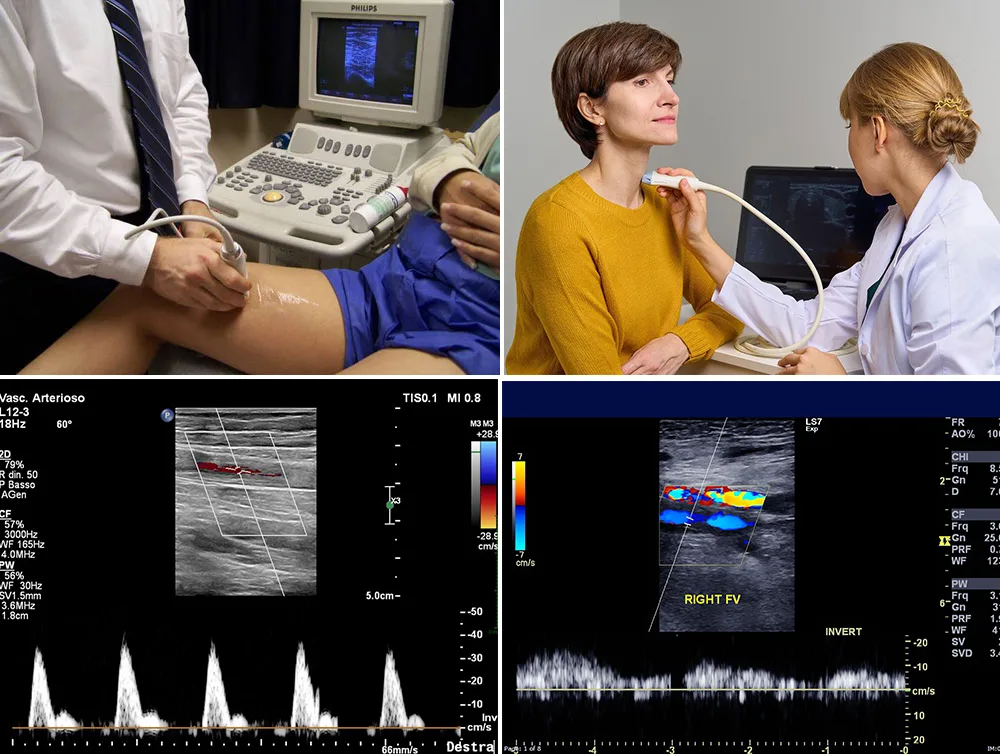
Common Clinical Uses
- Carotid artery Doppler studies
- Peripheral arterial Doppler examination
- Peripheral venous Doppler examination
- Deep Vein Thrombosis (DVT) detection
- Varicose vein evaluation
- Renal artery Doppler assessment
- Aortic and vascular disease screening
- Pre-operative and post-operative vascular evaluation
- Assessment of blood flow abnormalities
Advantages Over Conventional Diagnostic Methods
- Non-invasive and painless procedure
- No exposure to ionizing radiation
- Real-time blood flow visualization
- Accurate assessment of vascular disorders
- Early detection of arterial narrowing and blockages
- Effective screening for blood clots and DVT
- Safe for repeated follow-up examinations
Examples of Ultrasound Systems Used
- GE LOGIQ Series
- Philips EPIQ Series
- Samsung HERA Series
- Canon Aplio Series
- Mindray Resona Series
Typical Benefits
- Early diagnosis of vascular diseases
- Accurate evaluation of blood circulation
- Improved treatment planning and monitoring
- Detection of arterial stenosis and venous thrombosis
- Enhanced cardiovascular risk assessment
- Safe and reliable vascular imaging
- Valuable support for preventive and interventional healthcare services