
EEG (Electroencephalography)
EEG (Electroencephalography)
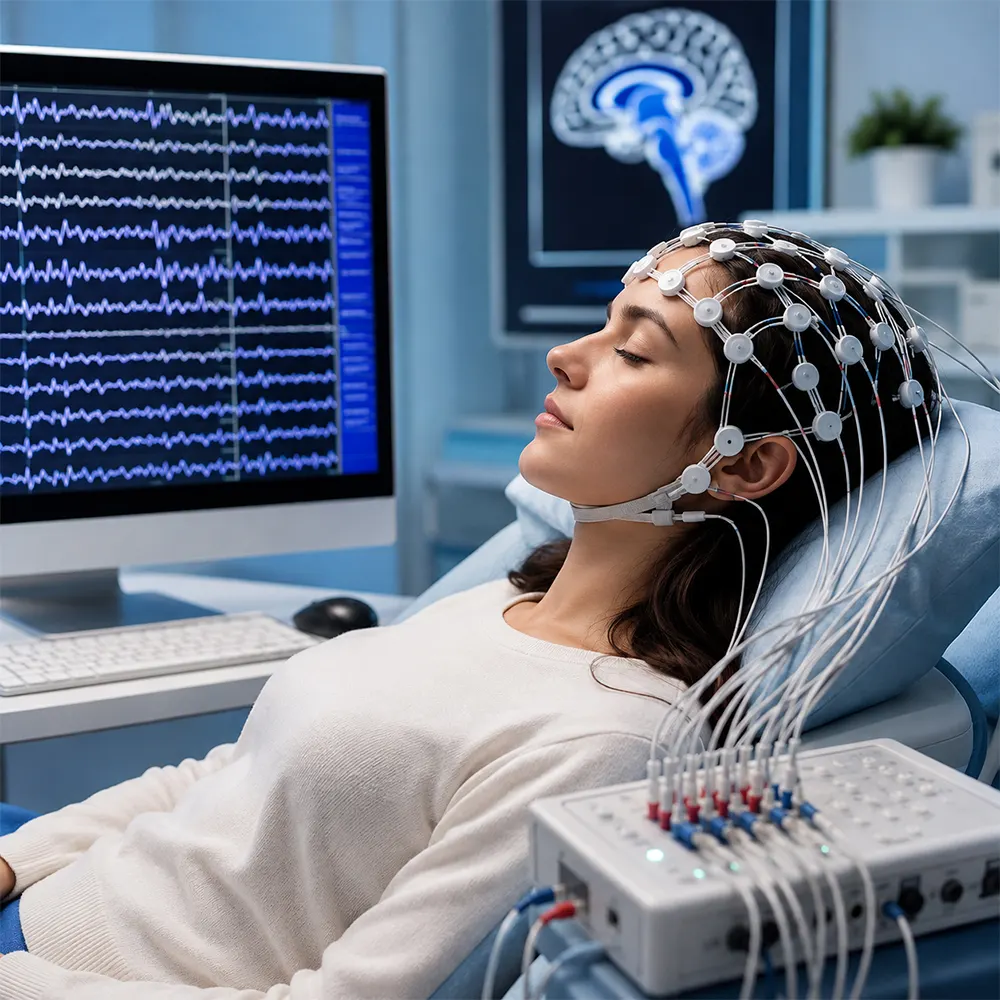
EEG (Electroencephalography) is a non-invasive neurophysiological diagnostic test used to record the electrical activity of the brain. It measures brain wave patterns through electrodes placed on the scalp and is widely used in the diagnosis and monitoring of epilepsy, seizures, sleep disorders, and various neurological conditions.
Key Specifications (Typical)
- Technology: Electroencephalography (EEG)
- Recording Type: Digital Brain Wave Recording
- Channels: 16, 32, 64, 128, or More Channels
- Electrodes: Scalp Surface Electrodes
- Display Type: Real-time Brain Activity Monitoring
- Signal Acquisition: High-Sensitivity Digital Amplifiers
- Data Storage: Digital EEG Recording and Archiving
- Connectivity: USB, LAN, DICOM, and Hospital Network Integration
- Analysis Features: Brain Mapping, Event Marking, and Automated Analysis
- Applications: Neurological Evaluation and Brain Function Assessment
Common Clinical Uses
- Diagnosis of epilepsy and seizure disorders
- Evaluation of unexplained loss of consciousness
- Assessment of sleep disorders
- Investigation of brain function abnormalities
- Monitoring patients in intensive care units
- Diagnosis of encephalopathy and brain infections
- Assessment of head injury and neurological trauma
- Pre-surgical evaluation for epilepsy treatment
- Monitoring effects of neurological medications
Advantages Over Conventional Neurological Assessment
- Non-invasive and painless procedure
- Real-time recording of brain electrical activity
- No exposure to ionizing radiation
- High sensitivity for seizure detection
- Valuable for long-term neurological monitoring
- Supports diagnosis of a wide range of brain disorders
- Safe for repeated follow-up examinations
Examples of EEG Systems
- Nihon Kohden EEG Series
- Natus NeuroWorks EEG Systems
- Cadwell Easy III EEG System
- RMS EEG-32 SuperSec
- Neurosoft EEG Systems
Typical Benefits
- Early detection of neurological disorders
- Accurate diagnosis of epilepsy and seizure conditions
- Improved assessment of brain function
- Enhanced treatment planning and monitoring
- Reliable support for neurological and neurophysiological evaluations
- Safe and repeatable diagnostic procedure
- Essential tool for comprehensive brain health assessment