
EMG (Electromyography)
EMG (Electromyography)
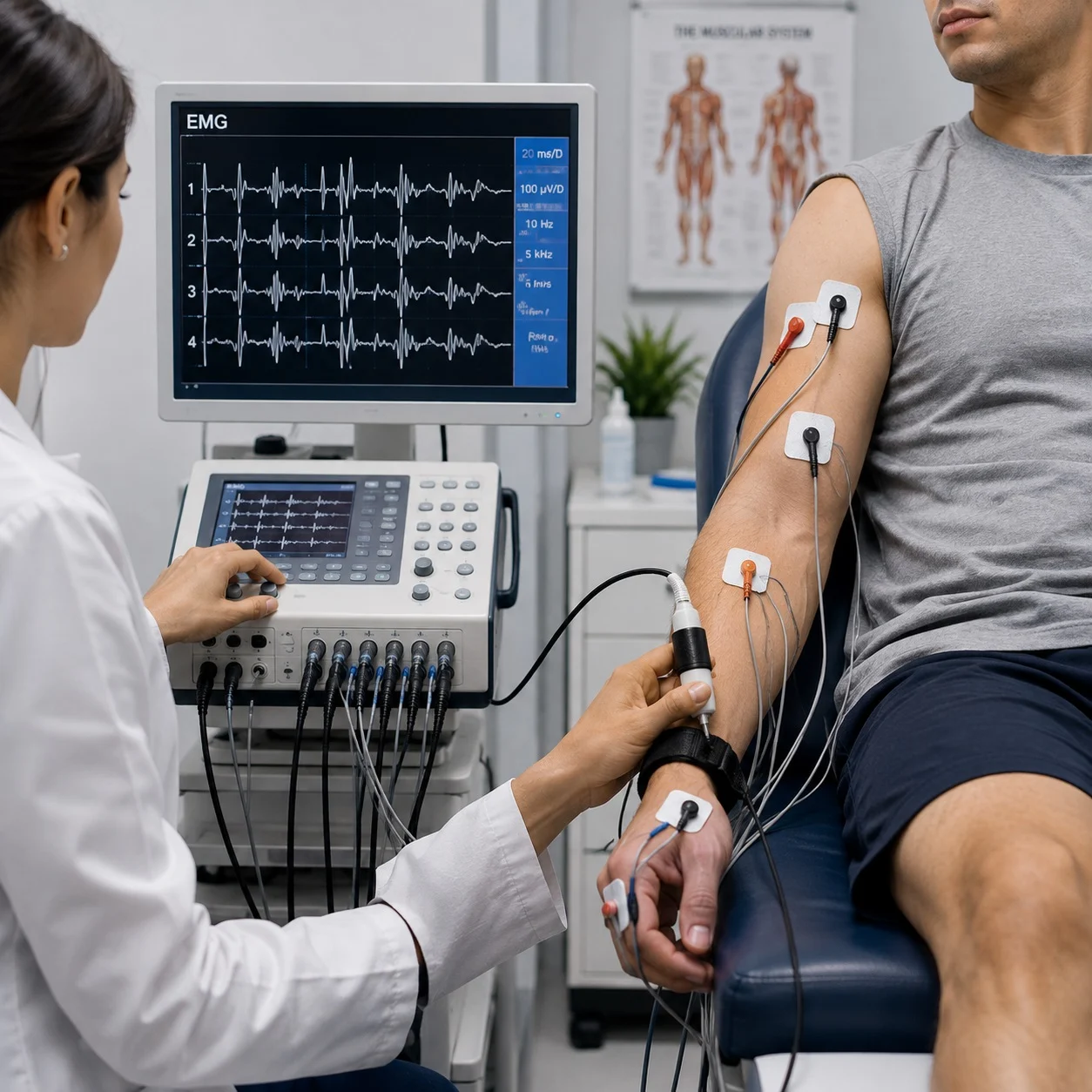
EMG (Electromyography) is a specialized neurophysiological diagnostic test used to evaluate the electrical activity of muscles and the nerves controlling them. It helps diagnose neuromuscular disorders, nerve injuries, muscle diseases, and conditions affecting the peripheral nervous system. EMG is often performed along with Nerve Conduction Studies (NCS) for comprehensive assessment of nerve and muscle function.
Key Specifications (Typical)
- Technology: Electromyography (EMG) and Nerve Conduction Studies (NCS)
- Recording Type: Muscle and Nerve Electrical Activity Recording
- Channels: Multi-Channel Digital Recording System
- Electrodes: Surface and Needle Electrodes
- Display Type: Real-time Signal Monitoring and Analysis
- Signal Acquisition: High-Sensitivity Digital Amplifiers
- Data Storage: Digital Recording and Reporting
- Connectivity: USB, LAN, DICOM, and Hospital Network Integration
- Analysis Features: Motor Unit Analysis, Nerve Conduction Analysis, and Automated Reporting
- Applications: Neuromuscular and Peripheral Nerve Assessment
Common Clinical Uses
- Diagnosis of peripheral neuropathy
- Evaluation of nerve injuries
- Assessment of muscle disorders (myopathies)
- Diagnosis of carpal tunnel syndrome
- Evaluation of radiculopathy and nerve root disorders
- Assessment of muscular dystrophies
- Diagnosis of motor neuron diseases
- Investigation of muscle weakness and numbness
- Follow-up of neuromuscular treatment outcomes
Advantages Over Conventional Neurological Assessment
- Direct assessment of nerve and muscle function
- High diagnostic accuracy for neuromuscular disorders
- Real-time electrical activity analysis
- Helps localize nerve injuries and abnormalities
- Supports early diagnosis of nerve and muscle diseases
- Provides objective functional assessment
- Valuable for treatment planning and monitoring
Examples of EMG Systems
- Nihon Kohden Neuropack Series
- Natus UltraPro S100 EMG System
- Cadwell Sierra Summit EMG
- RMS EMG EP Mark-II System
- Neurosoft Neuro-MEP/EMG Systems
Typical Benefits
- Early detection of neuromuscular disorders
- Accurate diagnosis of nerve and muscle diseases
- Improved treatment planning and monitoring
- Enhanced evaluation of nerve injuries and entrapments
- Reliable assessment of peripheral nervous system function
- Supports rehabilitation and neurological care
- Essential tool for comprehensive neurophysiological evaluation